El Salvador: Permaculture, meditation, and after-school programs
Originally published on Project Nuevo Mundo (projectnuevomundo.blogspot.com) on 20 August 2009. Recovered from web archives in October 2026; the text is unchanged.
(August 14 entry)
I visited a friend´s project in Bajo Lempa called Voices on the Border (http://www.votb.org/), in the hot and sweaty lowlands of El Salvador (acqui hay un chingo de calore!). We visited a few of the different communities she works with. The area is populated partly by war veterans (guerillas) who were awarded the land (that they were already in control of) as a result of the peace treaty at the end of the Civil War in 1992, and by recipients of a last-ditch land reform right before the outbreak of civil war in 1980 (too little, too late).
The communities are annually flooded as a result of a hydroelectric dam upriver run by a heartless Italian multinational energy company in theoretical collaboration with the Salvadoran government. The dam accumulates and releases tons of water during each rainy season. During the Central American tragedy Hurricane Mitch in 1998, the entire community was flooded, and people standing on the highest building in town, up to their necks in water, were miraculously rescued by fishermen from another village.
As a result of this event, 29 communities in the flood zone formed a type of inter-community institution to coordinate against future flooding. The organization is called United Communities (or Comunidades Unidos). Right now they are building a levy, which has not yet been finished due to contractors running away with some of the money.
The community we visited, Nueva Esperanza (New Hope), along with the other local communities, are suffering a grave problem of death from kidney failure as a result of having contaminated the drinking water supply with agricultural pesticides and chemicals, some of which are illegal in the United States and will hopefully be illegal here soon as well. If this isn´t an educational lesson about why you shouldn´t spray chemicals on your land, I don´t know what is.
The project I found most interesting during our short visit was the Escuela de Agroecologia (School of Agroecology), a group of ideological peasant-engineers wielding the weapons of appropriate technology and a knowledge of organic agriculture techniques (biodigestors, vermiculture and composting, testing of natural pesticides with ingredients like garlic and chili…). I talked with the jefe, who espoused support for creating alternative economic systems and spreading knowledge and tools for self-sufficiency. We are on the same page.
The next day, I gave a lecture on the solidarity economy, traveler´s support networks, holistic development and self-discovery, and connecting art to the soul and nature through self-expression. The audience was a group of teachers of gifted children in the fields of art and music.
We talked awhile about reconciling, overcoming, or transcending the issues presented by material society while at the same time living immersed in it (after all, an artist thrives on expressing the pain (s)he feels, and where would one be without that pain?).
We also discussed techniques on reconciling the ¨hippy traveler lifestyle¨with ¨normal society¨, where everybody perceives you as a crazy loon lost in acid dreams. I remember having this same discussion with a roommate a couple years ago, who made the point that it´s a good strategy to make yourself as appealing as possible to as many sectors of society as possible, so as not to isolate anyone, and therefore you can have access to more ears and minds than if you rolled around with dreadlocks and a tie-dye shirt (I´m still not going to shave my beard though).
Another topic raised, this one by a Salvadoran brought up in California, was how people who are natives to Salvadoran society but raised in the United States are treated. These people are looked down upon by Salvadoran society, whereas much respect is given to foreigners (me, for example). He shared his own experience trying to reintegrate into Salvadoran society, and his travels to Cambodia, where he was treated very well, but his Cambodian friends from Los Angeles were given a similar reception to the treatment he himself received upon his return to El Salvador.
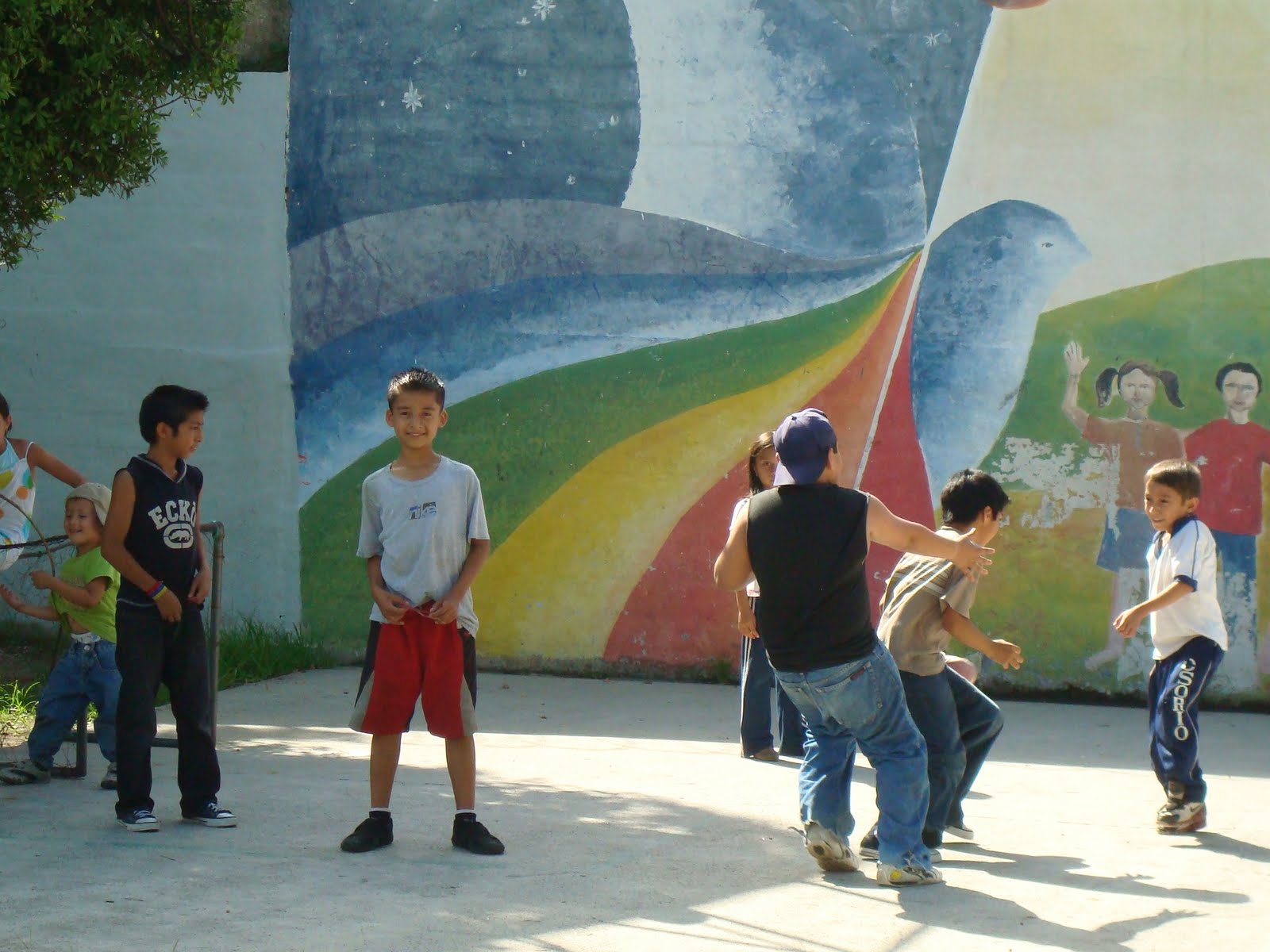
In the afternoon, we visited Marta Benavides´(Museo Aja, www.museoaja.org) permaculture farm outside San Salvador, which we are planning to turn into a place for kids from another friend´s after-school foundation (Fundación Nueva Vida, www.nuevavidafundacion.org) to come and have a day in nature to learn organic agriculture, and to mentally detoxify from the urban chaos of San Salvador, which is rated as the most dangerous city in Latin America (and competition is stiff). The Museo Aja is an ecological education and peace-oriented museum in Santa Ana, and it is open to the public. Its objective is to raise consciousness and create planetary citizens. Fundacion Nueva Vida is located in Ciudad Delgado on the outskirts of San Salvador, and has recently started their own garden project. It is an after-school accompaniment program for at-risk children, where you will find many wonderful children in a loving environment.
A final visit was made to a piece of land Marta owns on the Lago de Ilopango, a beautiful lake about thirty minutes outside San Salvador. We have ambitions to turn this piece of land into a Vipassana meditation and retreat center.