2012–2020
Cosmic Convergence
The festival as prototype
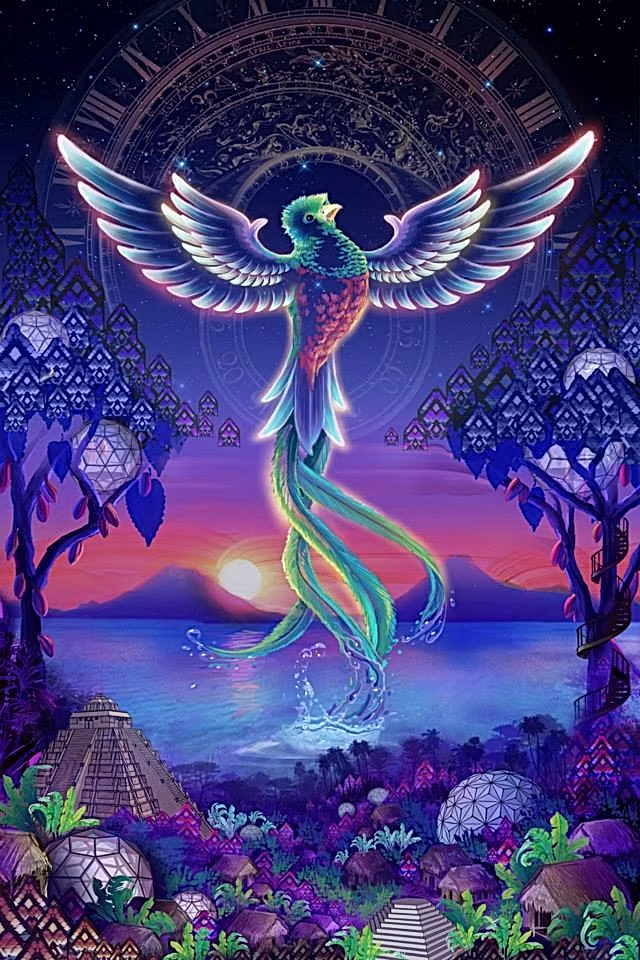
Cosmic Convergence started as a gathering between friends at Lake Atitlan. It was originally called Universal Dance Guatemala — just a party, really. But in December 2012, as the Mayan long-count calendar turned over, we renamed it Cosmic Convergence and something clicked.
The Place
Lake Atitlan is a volcanic crater lake in the highlands of Guatemala, surrounded by three young volcanoes — San Pedro, Toliman, and Atitlan. The communities around the lake are Tz’utujil and Kaqchikel Maya, fiercely independent people who have maintained their culture through centuries of pressure to abandon it. The lake has a way of holding you. [placeholder — what was your first encounter with the lake? What kept you coming back?]
What It Became
The festival was always 100% non-profit. All proceeds went to social projects around the lake — a nutrition center through Nutricosmica, a school, a women’s cooperative through CONSORCIO de Mujeres de Santiago Atitlan. We partnered with Maya Cosmos and Conscious Convergence to shape programming that honored the place rather than extracting from it.
The programming reflected that: kirtan and sound healing alongside electronic music. Sacred fire ceremonies. Medicinal plant walks led by Mayan elders. Permaculture workshops. The ethos was simple — leave a positive trace. Don’t just show up and party on indigenous land. Contribute something. Build something that stays.
What It Taught Me
Cosmic Convergence was a prototype, though I didn’t use that word at the time. It was a test of whether you could bring together art, ceremony, music, education, and community investment in a single container. Whether a festival could be a vehicle for something other than consumption.
It worked, imperfectly. [placeholder — what didn’t work? What tensions existed between the festival and the local communities? What would you do differently?]
Dormancy and Revival
The festival went dormant. [placeholder — when exactly, and why? COVID? Burnout? Logistics?] Now, in 2026, it’s coming back. The context is different — I’m different — but the core question is the same: can a gathering be generative rather than extractive?
That question of how communities organize, share resources, and sustain themselves without depending on traditional institutions — that’s what led directly to NuMundo.