Ecovillage
Before trying something as audacious as engineering one of these communities from my own utopian conception of what the ideal lifestyle is, I decided it was prudent to visit a few ecovillages that have already been functioning for a period of years.
Originally published on 22 January 2011 on the Project Nuevo Mundo blog, about a journey through ecovillages in Mexico in November 2009. Reproduced verbatim from web archives, recovered in October 2026.
Since the 1960’s, an alternative lifestyle movement has been gaining momentum around the world, manifesting in many different cultural and economic forms. The movement springs from a lack of faith in the survival of the current system, which seeks to continuously centralize, mechanize, and homogenize economies, cultures, landscapes, and a search for another way. As renegade World Bank economist Herman Daly put it, “We must recognize the necessity of change and blow the whistle on Growthmania on the grounds that GDP ‘growth’ simply means the satisfaction of ever more trivial wants while simultaneously creating ever more powerful externalities which destroy ever more important environmental amenities”.
From the hippy communes of California to the kibbutzes of Israel, citizens around the world have been experimenting with more viable forms of collective socioeconomic organization for decades now. These experiments have come to be generally known as ecovillages, or intentional communities. These communities have a wide variety of mission statements, activities, and member composition, but they share a tendency towards a lifestyle that is ecologically sound for body, mind, and planet. Some focus more on artistic creative expression, some on super-healthy lifestyles (raw vegan cuisine, juice fasting), and some on spiritual realization through yoga, meditation, and service. In general, space is opened for the evolution of more complete, balanced, and happy human beings. There are a few global databases online, including Intentional Communities and Global Ecovillage Network.
Before trying something as audacious as engineering one of these communities from my own utopian conception of what the ideal lifestyle is, I decided it was prudent to visit a few ecovillages that have already been functioning for a period of years. My first visit was to Nierika in Mexico State, a retreat center and evolving ecovillage. Here I met Armando and Anya, the beautiful couple that gave birth to this project. Nierika is nestled among verdant rising mountains, a truly spectacular setting to commune with nature and other like-minded humans. Water flows fresh from these mountains, and a small diversion is then diffused and dispersed to irrigate avocado, banana, coffee, and many other crops that grow here in abundance. During the growing season, Nierika is essentially self-sufficient in food supply, maintaining a population of about 20, about half of which are children. The children are educated on-site at a Montessori school, which also serves children from the surrounding community.
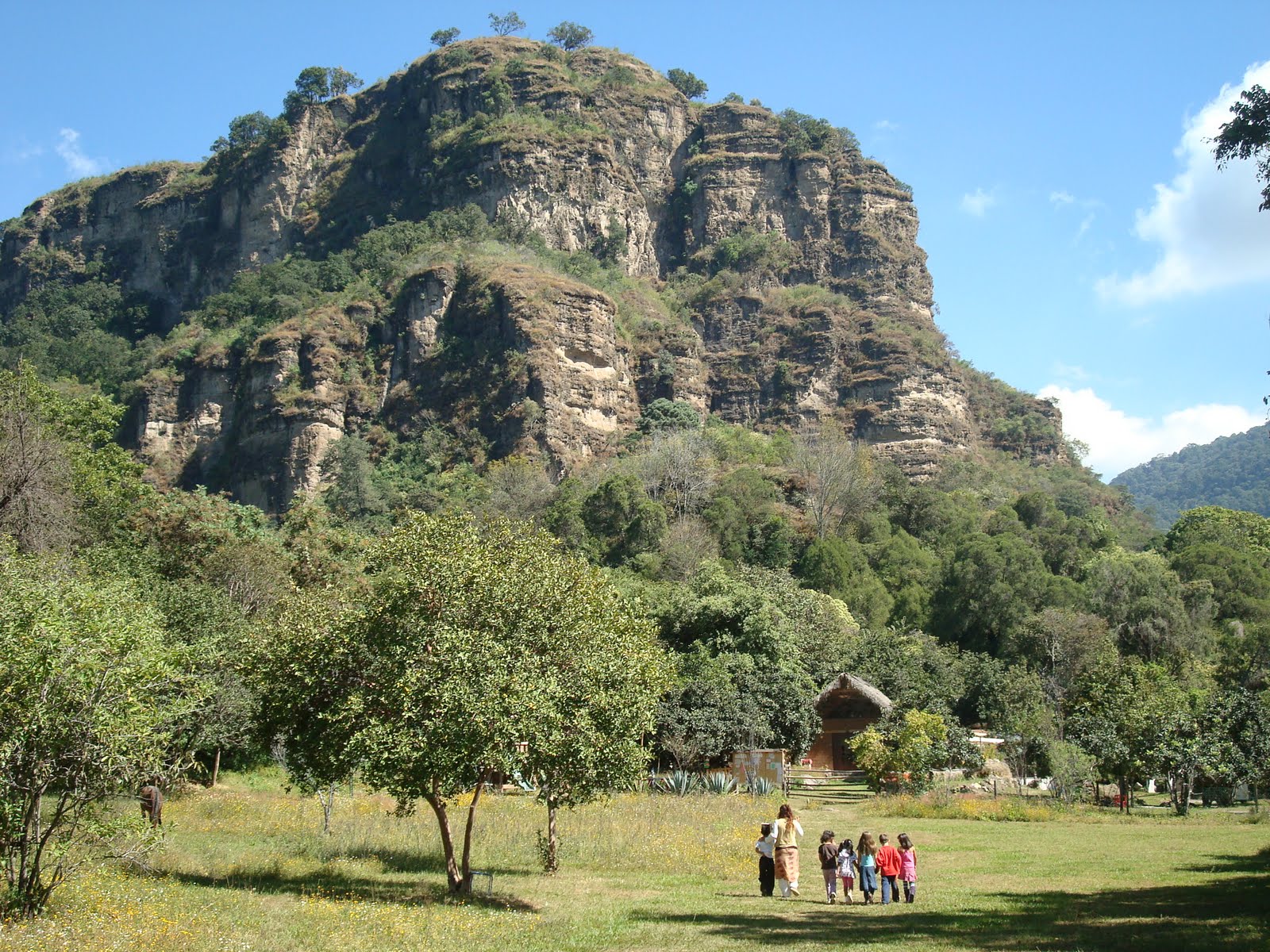
Nierika also plays host to ceremonial gatherings of Native American tribes. Intricately designed meditation and ceremonial spaces are to be found across the property.
A discussion with Armando yielded many fruitful ideas. He dryly commented that you cannot be sustainable if you are driving your kids to school every morning in your gas guzzler and picking them up again at the end of the day. Moreover, taking control of education back from a broken system is paramount to creating long-term change. He also advised me to examine the ways in which a project can directly benefit the community it is located in (education, healthcare, economy, etc.). For example, a native medicinal plant garden involving community elders has the potential to serve as a bridge to the community, and create economic opportunities and healthcare services at the same time. The Ix Chel Foundation in Belize is a successful model of this kind of project.
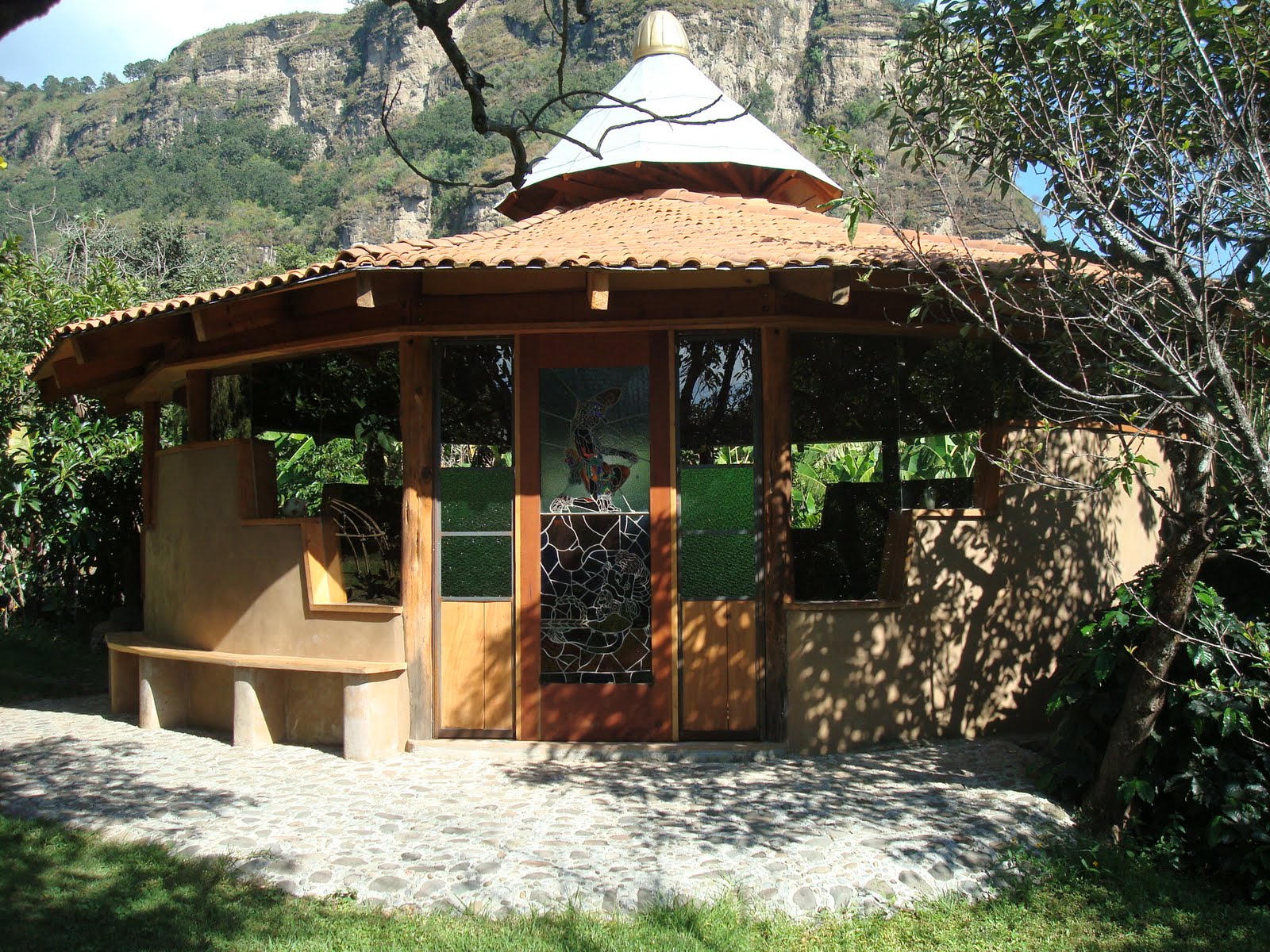
My next stop was the Bosque Village, a gringo-initiated project in the woods of Michoacan, near Patzcuaro. There is a cluster of other foreign-initiated ecological living projects in the vicinity, a phenomenon I have noticed in a number of places with magical natural surroundings (another one is Tepoztlan, in nearby Morelos). There were about eight volunteers on site when I arrived at the Bosque, split evenly between Europeans and North Americans. As you may have guessed, the site is located deep in the forest, with very little contact to the outside. However, I encountered wireless internet access powered by a small solar electric system! During my short stay there, I worked on building a chicken coop from cob. I also had a chat with the director, Brian, who gave me some advice on running a project such as this. We discussed possibilities for future collaboration on things like a volunteer database, the use of social networks like Facebook to connect the dots, and having gatherings and summits which would serve as educational workshops and networking opportunities.
Tepoztlan, as previously mentioned, is a nexus for consciousness- and ecology- oriented projects. Huehuecoyotl is one of the pioneer ecovillages from the early days of the movement, founded by an itinerant performance arts collective of Rainbow Tribe members who decided that this was the spot to settle. Down the mountain a couple of kilometers lies Tashirat, an orphanage, primary and secondary school (soon to be preparatory school as well!), and yoga center open to the public each morning for classes. Wandering through the stunning mountains that surround Tepoztlan on all sides, we were invited into a friend’s house for Kirtan meditation and a vegetarian meal. After talking with the monks present (two bearded orange-robed fellows, one from Japan and one from Italy), I discovered that they were from Ananda Marga, a spiritual and social service organization who is helping Project Nuevo Mundo to organize our inauguration festival, Universal Dance. I had been in contact with a friend of theirs for some time, who I would meet a matter of days later in Guatemala! Another lady at the dinner table was the organizer of the local chapter of Progressive Utilization Theory, whose other members I had met just a few days before during a meeting in Mexico City.
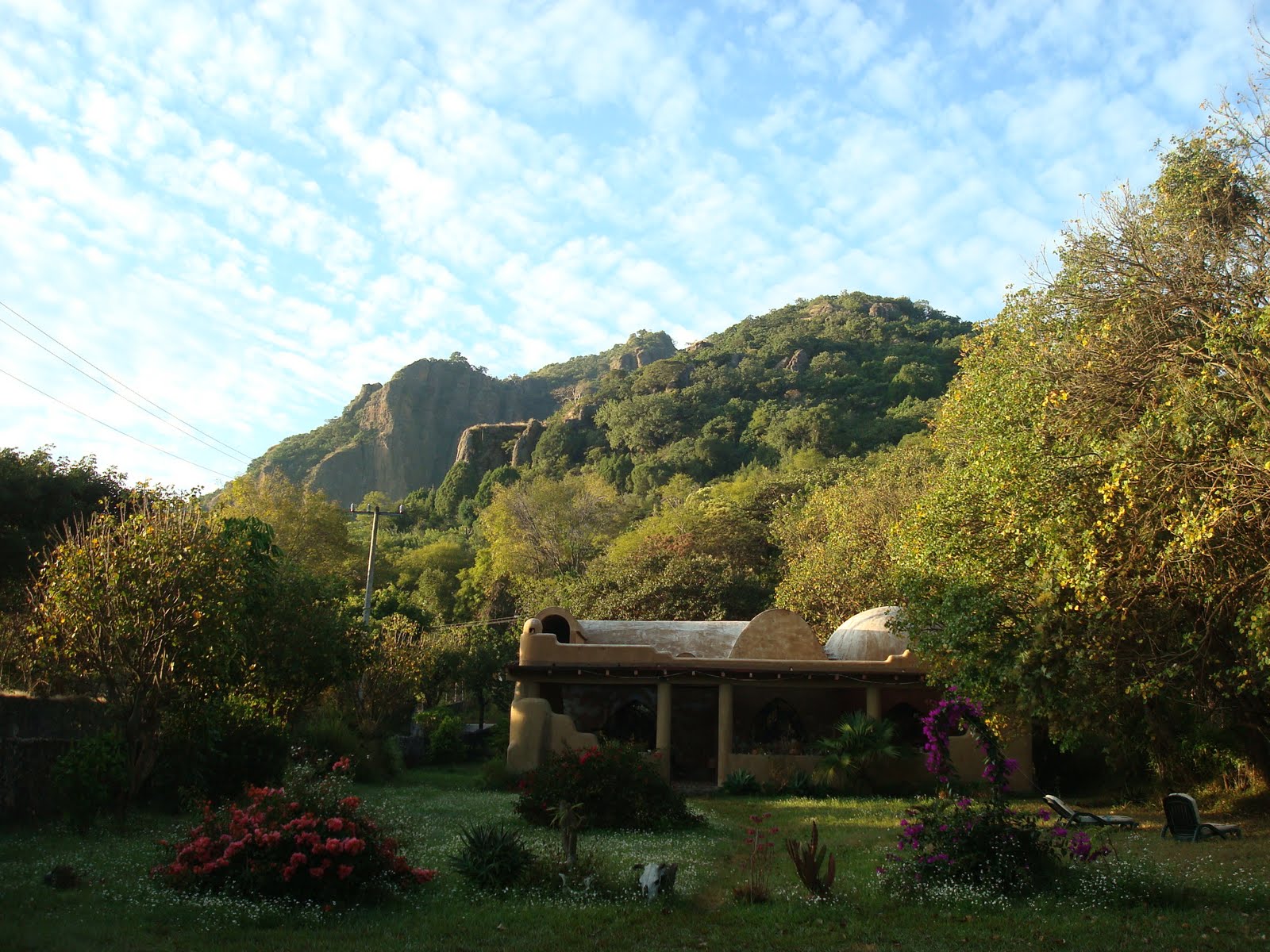
I had considered Tepoztlan as a possible location for our first Project Nuevo Mundo site, but ultimately decided against it for two main reasons: 1) Tepoztlan is not self-sufficient in water, which is piped in from outside, and 2) it is located less than one hour from the largest and most polluted city in the Western Hemisphere, and suburban encroachment by Mexico City’s upper classes is already beginning to leave its mark.
In addition to attending the PROUT meeting at the Universidad Nacional Autonomo de Mexico, I found myself at this bastion of independent thought a second time for a workshop with the Centro de Medios Libres. The Centro promotes free media access from the grassroots as an alternative to the corporate-controlled channels that feed the majority of humanity their (dis)information. The workshop was a lesson on how to broadcast your own radio station, using only a computer, an internet connection, and free software that was provided during the workshop to all participants.
Universal access to reliable information is quite possibly the most fundamental threat to the survival of the current systems of domination. On our website, you will find a number of independent news sources covering a diverse spectrum of viewpoints.
As I hopped on the bus down to Guatemala, my head was full of ideas on how to create a space for education in natural living and a free flow of information between individuals and between communities. Trial and error will shape the direction of the project over the next few months as we launch our dreams.
Love and Light,
David